

Table of Contents
- Quick Comparison: 5 Best Anti-Aging Bug Guard Creams
- How We Evaluated These Anti-Aging Bug Guard Creams
- 1. Scram No-See-Um Bug Guard: Collagen Beauty Cream That Repels Insects for Sensitive Skin Review
- 2. RoC Retinol Correxion Line Smoothing Max Hydration Cream
- 3. CeraVe Skin Renewing Night Cream
- 4. SkinCeuticals P-Tiox Wrinkle Modulating Peptide Cream
- 5. Caudalie Premier Cru Moisturizer
- Best Practices for Applying Insect Repellent on Face
- Frequently Asked Questions
Last Updated: September 11, 2026
Quick Comparison: 5 Best Anti-Aging Bug Guard Creams
Finding an anti-aging bug guard cream that actually does two jobs well is harder than it sounds. Most repellents strip your skin; most wrinkle creams do nothing against biting insects. This guide from Scram Products covers five options that try to bridge that gap, and one that was built for it from the start.
The Scram No-See-Um Bug Guard sits at the center of this list because it is the only formula here designed from day one as a collagen beauty cream that repels insects for sensitive skin. Below, we break down how each cream performs, who it suits, and where it falls short.
| Product | Best For | Insect Protection | Key Anti-Aging Actives |
|---|---|---|---|
| Scram No-See-Um Bug Guard | Outdoor use with sensitive skin | Yes (essential oils) | Collagen |
| RoC Retinol Correxion Max Hydration | Deep wrinkles, dry skin | No | Retinol, hyaluronic acid |
| CeraVe Skin Renewing Night Cream | Budget barrier repair | No | Ceramides, peptides |
| SkinCeuticals P-Tiox | Expression lines, premium budgets | No | Peptide complex |
| Caudalie Premier Cru | Mature skin, firming | No | TET8 technology, viniferine |
Only one product on this list repels insects. The other four are strong anti-aging creams you would layer under a separate repellent, which is exactly the routine most outdoor enthusiasts want to avoid.
How We Evaluated These Anti-Aging Bug Guard Creams
We judged each cream on four criteria: whether it actually repels biting insects, how well it supports skin elasticity and collagen production, how it performs on sensitive skin, and whether the texture holds up outdoors.
We also weighed practical realities. A cream that pills under sunscreen or washes off in the first swim fails the outdoor test no matter how good its ingredient list looks. Dermatologist-tested formulas and non-comedogenic labeling carried weight, as did fragrance and essential oil content, since strong scents attract as often as they deter.
If you plan to layer a repellent over a retinol cream, apply the retinol first and wait ten minutes. Retinol increases photosensitivity and can sting when a repellent with essential oils goes on top of freshly treated skin.
1. Scram No-See-Um Bug Guard: Collagen Beauty Cream That Repels Insects for Sensitive Skin Review
Scram No-See-Um Bug Guard is the only product in this comparison formulated to repel no-see-ums while nourishing skin with collagen. It is a multipurpose collagen beauty cream, not a repellent with skincare added as an afterthought.
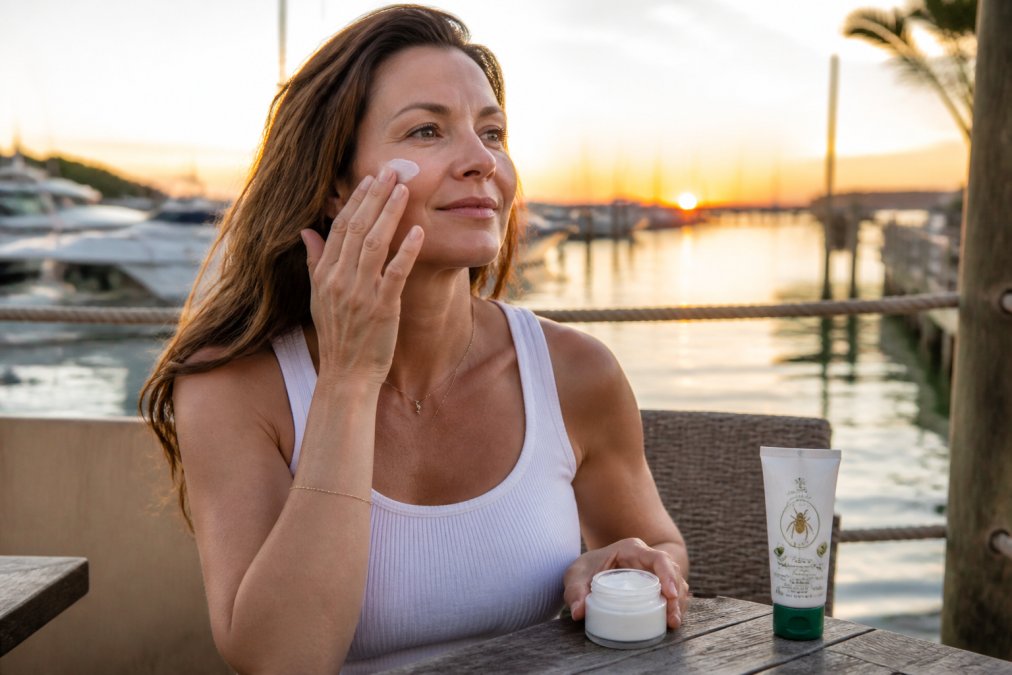
The formula relies on a blend of essential oils, including citronella, eucalyptus, lavender, cedarwood, and patchouli, to keep biting insects away. Collagen supports the skin’s structure, which matters for anyone spending long hours in sun and wind. The waterproof base means it holds through swimming, sweating, and a full day on the water without constant reapplication.
Test group feedback from our marina panel was consistent. Sean C., Chuck S., Teresa and Barry, and Peter G. all reported using it through fishing and evening dock time without bites, and several noted the scent was pleasant rather than chemical. That matters if your family refuses to wear anything that smells like a traditional repellent.
Pros and Cons
What works: it is the only dual-purpose option here, and the waterproof formula survives real outdoor conditions. The essential oil blend doubles as a light fragrance.
What doesn’t: it is not a substitute for a dedicated anti-aging serum if you are chasing deep wrinkle reduction. Collagen supports skin, but it will not deliver the retinol-grade resurfacing that RoC or SkinCeuticals offer.
Key Ingredients
- Citronella, eucalyptus, lavender, cedarwood, and patchouli (insect deterrence)
- Collagen (skin support and elasticity)
- Essential oil base (fragrance and repellent action)
Outdoor enthusiasts, boaters, and parents who want one product that protects skin and keeps no-see-ums away.
2. RoC Retinol Correxion Line Smoothing Max Hydration Cream
RoC’s retinol cream is the strongest wrinkle-fighter on this list, and it earns that spot on mechanism rather than marketing. Retinol is a vitamin A derivative that accelerates cell turnover in the epidermis and stimulates fibroblasts in the dermis to produce more collagen and elastin. That two-layer action is why retinol smooths fine lines and improves texture over weeks rather than days, and it is why dermatologists have treated it as the reference standard for photoaging for decades. The Max Hydration version pairs that retinol with hyaluronic acid, a humectant that pulls water into the upper layers of skin, which offsets the dryness and flaking that retinol causes during the adjustment period.
Where it falls short for outdoor use is not a small caveat, it is the whole story for this keyword. Retinol thins the stratum corneum and increases photosensitivity, so skin treated with it burns faster and more deeply under UV exposure. That is a real problem for anyone spending a day on a boat, a trail, or a dock. Layering an essential-oil repellent on top of retinol-treated skin compounds the risk: the same compromised barrier that lets retinol work also lets citronella, eucalyptus, and other volatile oils penetrate faster and sting harder. A common pattern reported by retinol users is a stinging, flushing reaction within minutes of applying a scented repellent over freshly treated skin.
There is also a timing problem. Retinol is a night ingredient. It degrades in sunlight, and applying it in the morning wastes the active and stacks photosensitivity on top of peak UV hours. So the practical routine is: retinol at night, a dedicated bug guard cream in the morning before you go outside. That is two products, two steps, and two chances to forget one.
Pros and Cons
What works: clinically studied retinol concentration, hyaluronic acid for hydration, and a track record that makes it the default recommendation from dermatologists and beauty editors alike. If deep wrinkle reduction is your primary goal and you do not spend long hours outdoors, this is a strong choice.
What doesn’t: zero insect protection, increased sun sensitivity, and a multi-week tolerance-building period that makes it unusable as a last-minute travel cream. It cannot serve as your outdoor defense, and it should not be layered under an essential-oil repellent on the same skin.
Key Ingredients
- Retinol (cell turnover, collagen stimulation, fine line reduction)
- Hyaluronic acid (humectant hydration)
- Glycerin and dimethicone (emollient and occlusive base)
Do not apply an essential-oil bug guard cream over retinol-treated skin in the same session. Wait until the following morning, and use sunscreen with SPF 30 or higher during the day. Retinol increases photosensitivity, and the combination of a compromised barrier plus volatile plant oils is a common trigger for contact irritation.
Nightly repair for people whose primary concern is deep wrinkles and who already have a separate daytime outdoor protection routine.
3. CeraVe Skin Renewing Night Cream
CeraVe built its reputation on barrier repair, and this night cream is the clearest expression of that philosophy. The formula leans on three ceramides, ceramide NP, ceramide AP, and ceramide EOP, which are the same lipid classes that make up roughly half of the skin barrier by weight. When the barrier is intact, it holds water in and keeps irritants out. When it is compromised by sun, wind, salt water, or repeated repellent application, it loses water and lets irritants through, which is why outdoor skin so often looks dull, flaky, and older than it is. Ceramides rebuild that lipid matrix.
The formula also includes a peptide complex, niacinamide, and hyaluronic acid. Niacinamide supports the barrier and helps even tone over time; the peptides signal the skin to support its own collagen; hyaluronic acid draws in water. The cream is non-comedogenic and fragrance-free, which matters for sensitive skin, many repellents and scented creams trigger reactions on reactive skin, and CeraVe sidesteps that entirely by leaving fragrance out.
Here is the gap that matters for this keyword: no insect-repelling ingredients, and no way to add them without undoing the cream’s purpose. This is a night cream. It is designed to sit on skin for eight hours while you sleep, not to hold up against sweat, swimming, and biting insects. Use it to repair your barrier overnight, then apply a dedicated bug guard cream before you head outside in the morning. That two-product routine works, but it is two products, and it is the routine most outdoor enthusiasts are trying to avoid.
Pros and Cons
What works: fragrance-free, non-comedogenic, ceramide-rich barrier repair at a price almost anyone can justify. It is one of the most reliable overnight recovery creams on the market for sensitive skin.
What doesn’t: no insect protection, no SPF, and a texture designed for sleep rather than for a day on the water. It cannot serve as your outdoor defense, and it is not formulated to be layered under a repellent.
Key Ingredients
- Ceramide NP, ceramide AP, ceramide EOP (barrier lipid repair)
- Peptide complex (collagen support)
- Niacinamide (barrier support and tone)
- Hyaluronic acid (humectant hydration)
- Glycerin and dimethicone (emollient and occlusive base)
If you use a night cream for barrier repair and a bug guard cream during the day, apply the night cream first at bedtime and let it absorb fully. In the morning, cleanse before applying your daytime bug guard cream so the two formulas do not stack into a heavy, pilling layer.
Sensitive or reactive skin that needs overnight barrier repair, paired with a separate daytime outdoor protection product.
4. SkinCeuticals P-Tiox Wrinkle Modulating Peptide Cream
SkinCeuticals targets expression lines with an advanced peptide complex, and the brand carries real dermatologist backing. If fine lines around the eyes and mouth are your main concern, this is a serious clinical-grade option.
Peptides support skin elasticity by signaling the skin to produce more collagen, which is the same goal Scram pursues through direct collagen in its formula. The difference is concentration and price. P-Tiox sits at a premium price point that puts it out of reach for casual buyers, and like the others here, it offers zero insect protection.
Buy it for the peptide science. Do not expect it to keep no-see-ums off your ankles at dusk.
5. Caudalie Premier Cru Moisturizer
Caudalie’s Premier Cru leans on patented TET8 technology to target signs of aging and viniferine to correct dark spots, packaged in a rich, hydrating texture that suits mature skin. It is a luxury moisturizer with clean ingredients and strong overnight recovery results.
The trade-offs are the same as the rest of the non-repellent group. No bug protection, and luxury pricing that reflects the brand more than the function. If hyperpigmentation and firming are your priorities and you already have a repellent you trust, it earns its place on your shelf. If you want one cream that handles both jobs on a boat or a trail, it does not.
Best Practices for Applying Insect Repellent on Face
Applying repellent to your face requires more care than your arms and legs. The skin is thinner, more reactive, and close to your eyes and mouth, so the method matters as much as the product.
Follow these steps:
- Spray or squeeze the product onto your fingertips first, never directly onto your face.
- Apply to your forehead, cheeks, and jawline, avoiding your eyes, nostrils, and lips.
- Use a cream formula like Scram No-See-Um Bug Guard, which spreads evenly and resists running into your eyes.
- Reapply after swimming or heavy sweating, even with a waterproof formula.
- Wash your hands after application, and rinse your face before bed.
Apply the cream yourself rather than letting children do it, and keep it away from their hands so it does not end up in their eyes or mouth. A cream beats a spray here because you control exactly where it lands.
Never apply an essential-oil repellent to broken, sunburned, or freshly shaved skin (the CDC). The oils can sting sharply and cause a reaction that looks like a bite, which sends people reaching for more product and makes the irritation worse.
Frequently Asked Questions
Can you combine anti-aging skincare with insect repellent?
Yes. A dual-purpose anti-aging bug guard cream pairs wrinkle-fighting ingredients like collagen, peptides, and antioxidants with insect-deterring essential oils such as citronella, eucalyptus, and lavender. This saves a step in your routine and reduces layering conflicts. Look for a non-comedogenic, dermatologist-tested formula that hydrates without clogging pores, and patch-test before full application.
What ingredients should I look for in a collagen-based bug guard?
Seek collagen for skin elasticity, plus humectants like hyaluronic acid or glycerin for hydration, and antioxidants such as vitamin C or niacinamide to fight photoaging. For insect protection, choose plant-based oils including citronella, cedarwood, patchouli, and eucalyptus. Avoid synthetic fragrances if your skin is sensitive. A waterproof formula helps protection last through sweat and swimming.
Are bug repellent creams safe for sensitive skin?
Many are, especially those labeled hypoallergenic, non-comedogenic, and free of synthetic fragrance. Essential-oil formulas can still trigger reactions in some people, so apply a small amount to your inner forearm and wait 24 hours. If you have eczema or rosacea, choose a cream with ceramides or colloidal oatmeal to support the skin barrier. Discontinue use if redness or itching develops.
How often should you reapply insect-repelling beauty creams?
Reapply every two hours during active outdoor exposure, and sooner after swimming, heavy sweating, or toweling off. Waterproof formulas hold up longer but still need refreshing. For your face, apply after your serum and moisturizer, then reapply with a light patting motion to avoid disturbing makeup. Always follow the product label for specific reapplication guidance.
Do natural essential oils effectively repel insects while moisturizing skin?
Essential oils like citronella, eucalyptus, lavender, cedarwood, and patchouli have documented insect-deterring properties and can moisturize when blended into a cream base. They are generally gentler than synthetic repellents but may need more frequent reapplication. Pairing them with occlusive ingredients helps extend wear time. Effectiveness varies by insect species and concentration.
The real challenge with outdoor skincare is that protection and repair usually pull in opposite directions. Repellents dry you out; anti-aging creams leave you exposed to bites. Scram Products closes that gap with a waterproof collagen beauty cream that repels no-see-ums while nourishing your skin, safe for the whole family two years and older, and pleasant enough that your kids will actually wear it. Get started with Scram Products and stop choosing between protected skin and healthy skin.


