

Table of Contents
- What Makes a Waterproof Bug Repellent Actually Work in Water
- DEET vs Picaridin for Water Activities: Which Holds Up?
- Top Waterproof Bug Repellents for Swimming Reviewed
- Safe Bug Repellent for Kids Swimming: What Parents Need to Know
- Reapplication Frequency for Waterproof Repellent After Swimming
- Application Tips for Maximum Coverage During Water Activities
- Which Waterproof Bug Repellent Should You Choose?
- Conclusion
Last Updated: August 28, 2026
Most bug sprays wash off the moment you hit the water. The difference between a waterproof bug repellent that actually works and one that just claims to is significant. Below, we break down what separates real water-resistant protection from marketing copy, review the top options available, and tell you exactly when to reapply.
Quick Picks:
- Best Natural Cream Formula: Scram No-See-Um Bug Guard, multipurpose collagen cream with essential oils, pleasant scent, waterproof
- Best High-DEET Option: REPEL Sportsmen Max 40% DEET, maximum chemical protection for heavy exposure
- Best Picaridin Option: Sawyer Picaridin 20%, low odor, long-lasting, DEET-free
- Best PMD Formula: Superbloc Bloc Off Spray, CDC-recognized plant-based active, gentle on skin
What Makes a Waterproof Bug Repellent Actually Work in Water
A waterproof bug repellent maintains its active ingredient concentration on the skin barrier after water exposure. Genuinely water-resistant formulas use higher concentrations of active ingredients, cream or lotion-based carriers that bond to the skin, or both.
Active Ingredients and Water Resistance
The active ingredient is the single biggest factor in how well a repellent survives water contact:
- DEET (N,N-Diethyl-meta-toluamide): The most extensively tested synthetic repellent. Higher concentrations hold up better after submersion, but DEET degrades certain synthetic fabrics and plastics.
- Picaridin: A synthetic compound with neutral scent. Comparable protection duration to DEET at equivalent concentrations, without material-damaging drawbacks.
- PMD (para-menthane-3,8-diol): Derived from lemon eucalyptus oil. Recognized by the CDC’s insect repellent guidance as an effective plant-based active. Requires more frequent reapplication after swimming than high-concentration DEET.
- Essential oil blends: Citronella, eucalyptus, lavender, cedarwood, and patchouli combinations create a topical barrier through scent and dermal absorption. Best suited for shorter exposure windows and lighter insect pressure.
Natural vs. Synthetic Formulas: Key Differences
Synthetic formulas generally outlast natural ones after water exposure. DEET and picaridin at 20%+ concentrations offer longer protection duration per application. Natural essential oil formulas require more frequent reapplication but carry advantages: no chemical odor, skin-nourishing carriers, and no risk of damaging gear or pool surfaces. For a calm sunset kayak with moderate mosquito pressure, a well-formulated natural cream works well. For all-day saltwater fishing in no-see-um territory, a synthetic formula or reapplication every 90 minutes is advisable.
DEET vs Picaridin for Water Activities: Which Holds Up?
DEET and picaridin are the two most reliable synthetic active ingredients for water activities.
DEET at 40% concentration provides strong, long-lasting efficacy against mosquitoes, ticks, gnats, and biting flies. The drawback for swimmers: DEET can degrade certain synthetic fabrics, plastic goggle frames, and pool equipment, and carries a noticeable chemical smell. After submersion, reapplication is recommended.
Picaridin at 20% delivers comparable protection duration, many formulas claim up to 12 hours against mosquitoes, without material-compatibility issues. It’s odorless or nearly so, non-greasy, and safe on clothing and gear. For families and anyone sharing pool equipment, picaridin is the more practical synthetic option.
A common mistake with both: assuming a single application lasts all day regardless of water exposure. Submersion resets the clock on any repellent, synthetic or natural.
Top Waterproof Bug Repellents for Swimming Reviewed
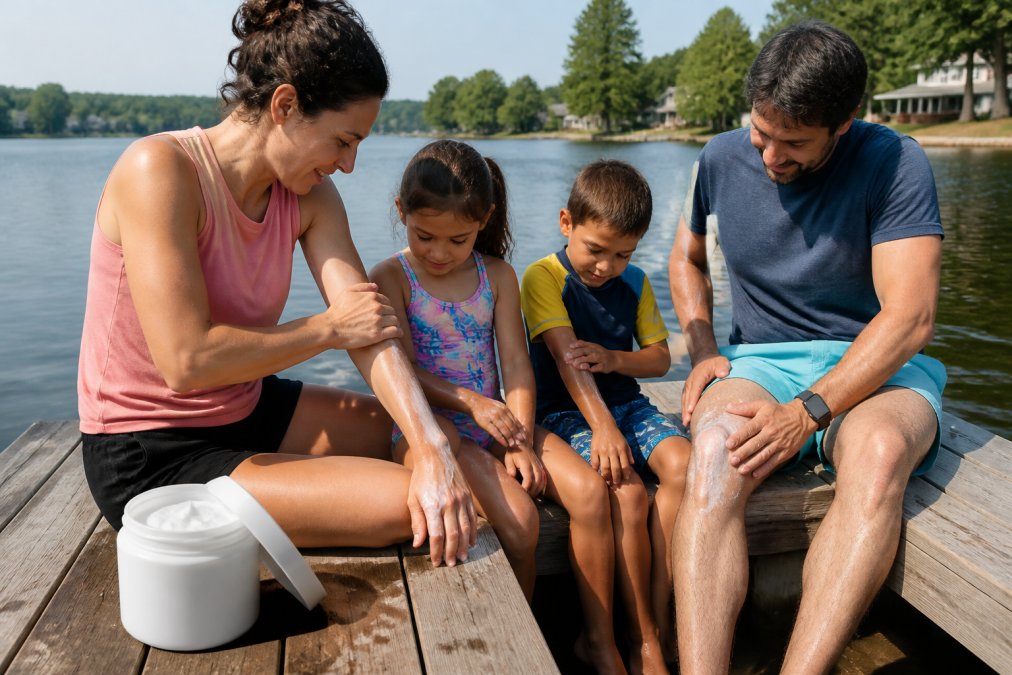
1. Scram No-See-Um Bug Guard: Best Natural Cream Formula
Scram No-See-Um Bug Guard is a top pick for swimmers who want protection that also nourishes the skin. The cream base includes collagen alongside essential oils: citronella, eucalyptus, lavender, cedarwood, and patchouli. That combination creates both a scent-based deterrent against no-see-ums, mosquitoes, gnats, and black flies, and a moisturizing topical application.
The scent profile is a clear differentiator from conventional repellents. The waterproof formula holds up through water exposure, though like all natural repellents, reapplication after extended swimming sessions keeps protection consistent. Scram is labeled for children ages 2 and older, making it a practical family option for beach and pool days.
Best for: Swimmers, boaters, beachgoers, and families seeking DEET-free protection with a pleasant scent and skin-care benefits.
Pros:
- Doubles as a collagen beauty cream
- Pleasant essential oil scent; no chemical odor
- Effective against no-see-ums, mosquitoes, gnats, and black flies
- DEET-free, suitable for ages 2 and up
Cons:
- Requires reapplication after extended submersion
- Cream format takes longer to apply than a spray
2. High-DEET Aerosol Options: Maximum Protection for Heavy Exposure
For heavy insect pressure in saltwater marshes, dense woodland, or dawn fishing trips, high-DEET aerosol formulas deliver the longest protection window per application. Options with 25-40% DEET concentrations repel mosquitoes, ticks, biting flies, gnats, no-see-ums, chiggers, and fleas.
The tradeoff is real: DEET has a strong chemical odor, can damage synthetic fabrics and plastic surfaces, and requires careful handling around pool equipment. These formulas are not ideal for children or use near pool rails and diving boards.
Best for: Adults in high-exposure environments who prioritize maximum protection duration over scent or material safety.
Pros:
- Long protection window per application
- Broad-spectrum insect coverage
- Sweat-resistant aerosol formula
Cons:
- Strong chemical odor
- Can degrade synthetic fabrics and plastics
- Not ideal for children or sensitive skin
3. Picaridin-Based Repellents: The Low-Odor Middle Ground
Picaridin at 20% concentration, available in pump spray and lotion formats, sits in the practical sweet spot for many outdoor swimmers. Protection against mosquitoes extends to 12 hours under normal conditions, with coverage against biting flies, gnats, and sand flies for up to 8 hours. Unlike DEET, picaridin is safe on clothing and gear, making it pool-friendly. The near-odorless scent profile makes it realistic for families who’ve rejected DEET on smell grounds alone.
Best for: Families and outdoor enthusiasts who want long-lasting synthetic protection without DEET’s material-compatibility issues or chemical odor.
Pros:
- Long protection duration
- Odorless or near-odorless
- Safe on clothing, gear, and pool surfaces
- Non-greasy formula
Cons:
- Requires reapplication after swimming
- Can cost more than comparable DEET options
4. Plant-Based Alternatives: PMD and Essential Oil Formulas
PMD-based formulas occupy a unique position: plant-derived but with protection performance that the EPA’s registered repellent list recognizes as effective. Products using 8% PMD from lemon eucalyptus have demonstrated 6+ hours of protection in lab testing. Many include skin-conditioning ingredients like aloe vera and chamomile.
Pure essential oil sprays offer shorter protection windows and work best for lower-intensity exposure: evening patios, light outdoor dining, or short excursions. They’re not suitable for a full day of open-water swimming in mosquito-heavy territory.
Best for: Health-conscious individuals and families wanting plant-based protection for moderate outdoor exposure.
Pros:
- Plant-derived, no synthetic active ingredients
- Gentle on skin, often includes hydrating ingredients
- Pleasant scent profiles
Cons:
- Shorter protection duration than DEET or picaridin
- Require more frequent reapplication after water exposure
Safe Bug Repellent for Kids Swimming: What Parents Need to Know
Safe bug repellent for kids swimming starts with checking the age labeling and avoiding DEET on young children’s skin where possible. The American Academy of Pediatrics guidance on insect repellents recommends that DEET-based products used on children contain no more than 30% DEET, and that parents apply repellent to their own hands first, then rub it onto the child’s skin, avoiding eyes, mouth, and hands. For children ages 2 and older, DEET-free options including picaridin and essential oil formulas are practical alternatives.
Scram No-See-Um Bug Guard is labeled for children ages 2 and older. Its essential oil formula addresses the concern parents most commonly raise: “My kid has sensitive skin and reacts to everything.” The cream base is skin-nourishing rather than drying.
A few practical rules for kids at the pool or beach:
- Apply repellent before sunscreen, not after
- Reapply after every swim, not just every few hours
- Keep repellent away from eyes and mouth
- Do not apply to cuts, wounds, or irritated skin
Reapplication Frequency for Waterproof Repellent After Swimming
Reapplication frequency depends on the active ingredient, the concentration, and how long you were in the water. No repellent lasts indefinitely through repeated submersion.
General guidelines by formula type:
|
Formula Type |
Typical Reapplication Interval (After Swimming) |
|---|---|
|
High-DEET (40%) aerosol |
Every 2-3 hours after submersion |
|
Picaridin 20% lotion |
Every 2-3 hours after submersion |
|
PMD (8%) spray |
Every 1.5-2 hours after submersion |
|
Essential oil cream |
Every 60-90 minutes after submersion |
Longer submersion, higher water temperature, and vigorous activity all accelerate reapplication needs.
How Pool Chemicals Affect Repellent Performance
Pool chlorine actively degrades repellent formulas faster than fresh water. Chlorine is an oxidizing agent that breaks down organic compounds, including the active ingredients in both synthetic and natural repellents. If you’re spending the day at a chlorinated pool rather than a lake or ocean, plan to reapply your waterproof bug repellent more frequently than the label suggests. For essential oil formulas, that means every hour after pool swimming. For DEET or picaridin, every 90 minutes to 2 hours is reasonable.
DEET can interact with pool liners, particularly vinyl liners, causing discoloration or surface degradation over time. If you’re managing a private pool, opt for picaridin or natural formulas to protect the liner.
Environmental Impact on Water Ecosystems
DEET has been detected in freshwater ecosystems and has shown toxicity to aquatic invertebrates at elevated concentrations, according to research reviewed by the US Geological Survey on contaminants in water systems. While typical personal-use quantities are unlikely to cause measurable ecosystem damage alone, the cumulative effect of widespread use in popular swimming areas is worth considering.
Essential oil and PMD-based formulas generally carry lower environmental toxicity profiles. For swimmers in rivers, lakes, and coastal areas, choosing a natural formula reduces the chemical load entering the water with every swim.
Application Tips for Maximum Coverage During Water Activities
Proper topical application makes the difference between a repellent that works and one that leaves gaps. The most common mistake is applying too little.
For swimming scenarios specifically:
- Apply 15-20 minutes before water exposure, let the formula bind to the skin before it gets wet
- Cover all exposed skin thoroughly, behind the ears, ankles, and the back of the neck are the spots most people miss
- Use a cream or lotion format for swimming, aerosol sprays apply thinner layers that wash off faster
- Don’t apply under clothing, repellent works on exposed skin; clothing provides its own barrier
- Reapply immediately after toweling off, don’t wait until you feel bites
- Layer correctly with sunscreen, apply repellent first, then sunscreen on top
Which Waterproof Bug Repellent Should You Choose?
The best waterproof bug repellent for swimming is the one that matches your exposure level, skin sensitivity, and how long you’ll be in the water.
|
Option |
Active Ingredient |
Best For |
Reapply After Swimming |
|---|---|---|---|
|
Scram No-See-Um Bug Guard |
Essential oil blend |
Natural protection, skin care, families (ages 2+) |
Every 8 hours |
|
Picaridin 20% lotion |
Picaridin |
Long-lasting DEET-free synthetic protection |
Every 2-3 hours |
|
40% DEET aerosol |
DEET |
Maximum protection in heavy exposure environments |
Every 2-3 hours |
|
PMD spray |
PMD from lemon eucalyptus |
Plant-based with longer protection window |
Every 1.5-2 hours |
|
Essential oil spray |
Citronella, peppermint, etc. |
Light outdoor use, casual exposure |
Every 60 min |
If you want DEET-free protection that also works as a skincare product, smells good, and is safe for children ages 2 and older, Scram No-See-Um Bug Guard is the clear choice. If you’re heading into a high-pressure insect environment for an extended period and want maximum synthetic protection, picaridin at 20% is the most practical DEET alternative. Reserve high-DEET formulas for adult use in genuinely extreme conditions.
No repellent survives repeated submersion without reapplication. Build reapplication into your routine the same way you build in sunscreen reapplication.
Choosing the right waterproof bug repellent for swimming means balancing protection, skin health, and realistic reapplication habits. Scram Products offers the Scram No-See-Um Bug Guard as a DEET-free, waterproof cream formula built for exactly this use case, effective against no-see-ums, mosquitoes, and biting insects, with a collagen and essential oil base that nourishes the skin rather than drying it out. Visit scramproducts.com and purchase now to get protected before your next water adventure.
Frequently Asked Questions
Q: Is there a truly waterproof bug repellent for swimming?
A: No repellent is completely waterproof after full submersion, but water-resistant formulas, particularly lotion-based and cream-based products, hold up significantly better than aerosols or spray-on options. Cream formulas like Scram No-See-Um Bug Guard bond more closely to the skin barrier, giving them an edge in wet conditions. The key is choosing a water-resistant formula and reapplying promptly after you exit the water, towel off, and dry your skin.
Q: How often should you reapply bug repellent when swimming?
A: Reapplication frequency for waterproof repellent depends on the active ingredient. DEET and Picaridin formulas generally hold for 1 to 2 hours after swimming before protection drops noticeably. Natural essential oil-based repellents typically need reapplication sooner, often within 30 to 60 minutes after getting wet. As a practical rule, reapply every time you towel off after leaving the water, regardless of the formula you are using.
Q: What is the safest bug repellent for kids swimming?
A: A safe bug repellent for kids swimming is one that avoids high DEET concentrations and uses EPA-registered active ingredients at child-appropriate levels. The CDC recommends DEET concentrations no higher than 30% for children ages 2 and older. Picaridin and PMD-based formulas are also considered safe for children 2 and up. Natural essential oil formulas like Scram No-See-Um Bug Guard, labeled for children 2 years and older, offer a DEET-free option with a gentler ingredient profile.
Q: Can you use bug repellent while swimming in a lake or pool?
A: Yes, you can apply a waterproof bug repellent before swimming in a lake or pool. Be aware that pool chlorine and other chemicals accelerate the breakdown of repellent on your skin, so protection duration shortens compared to dry conditions. In natural water like lakes, some synthetic repellents, particularly DEET, carry environmental toxicity concerns for aquatic organisms. Opting for a biodegradable or plant-based formula reduces that environmental impact while still providing meaningful mosquito protection.
Q: Are DEET-free bug repellents effective for water activities?
A: DEET-free repellents can be effective for water activities, though protection duration after submersion is generally shorter than DEET-based options. Picaridin at 20% concentration performs closest to DEET in both efficacy and water resistance. PMD from lemon eucalyptus offers CDC-recognized protection lasting up to 6 hours in dry conditions. Essential oil-based formulas, including those with citronella and eucalyptus, work well for lighter insect pressure but need more frequent reapplication in and around water.
This article was written using GrandRanker


