

Table of Contents
- What Are No-See-Ums and Why Do Their Bites Hurt So Much?
- Immediate Steps to Treat No-See-Um Bites
- How to Stop Itching from Bug Bites: OTC and Home Remedies
- Allergic Reactions and When to See a Doctor
- Post-Bite Infection Prevention
- No-See-Um Bite Duration: What to Expect During Recovery
- Best Repellent for No-See-Ums: Prevention Before the Bite
- Conclusion
- Frequently Asked Questions
Last Updated: August 29, 2026
What Are No-See-Ums and Why Do Their Bites Hurt So Much?
No-see-ums are tiny biting midges belonging to the family Ceratopogonidae, responsible for some of the most disproportionately painful bites in the insect world. Despite measuring less than 3 millimeters in length, these insects deliver a punch far bigger than their size suggests.
When a female midge bites, she uses scissor-like mouthparts to create a small puncture wound, then injects saliva containing anticoagulants and irritants. That saliva triggers a localized allergic reaction in most people, producing redness, swelling, and intense itching that can last days. According to the CDC’s information on biting midges and skin reactions, repeated exposure can heighten the dermatological response, meaning the more you get bitten over a lifetime, the worse the reaction can become.
No-see-ums thrive in coastal and tropical regions near breeding habitats like salt marshes, mangroves, and standing water. They are most active at dusk and dawn, exactly when most people are outdoors. Bite clusters on exposed skin, especially ankles, arms, and the back of the neck, are the telltale signature of a no-see-um encounter.
How to Identify No-See-Um Bites vs. Mosquito Bites
No-see-um bites typically appear as small, intensely itchy red dots, often in tight clusters of three to ten bites in the same area. The initial burning sensation is sharper than a mosquito bite, and inflammation persists longer. The bite site may develop a small, hard center surrounded by a wider ring of redness.
Mosquito bites usually appear as single, raised welts with a soft, puffy center. They itch intensely for the first hour or two, then fade within a day or two for most people.
The key distinction: multiple bites grouped tightly together on a single patch of skin, especially after being outdoors near water at dusk or dawn, indicates no-see-ums. Mosquito bites are rarely clustered that tightly.
Immediate Steps to Treat No-See-Um Bites
The first 30 minutes after getting bitten matter significantly. Acting quickly reduces inflammation, limits skin irritation, and lowers the risk of secondary infection from scratching.
Step 1: Clean the Bite Site
Wash the affected area with mild soap and clean water as soon as possible. This removes residual saliva, dirt, and bacteria introduced during the bite. Pat the skin dry gently; do not rub, as friction increases inflammation and itching.
If outdoors without running water, a clean wet cloth or alcohol wipe works as a temporary measure. The goal is to reduce the bacterial load on the skin surface before the scratching reflex kicks in.
Step 2: Apply a Cold Compress
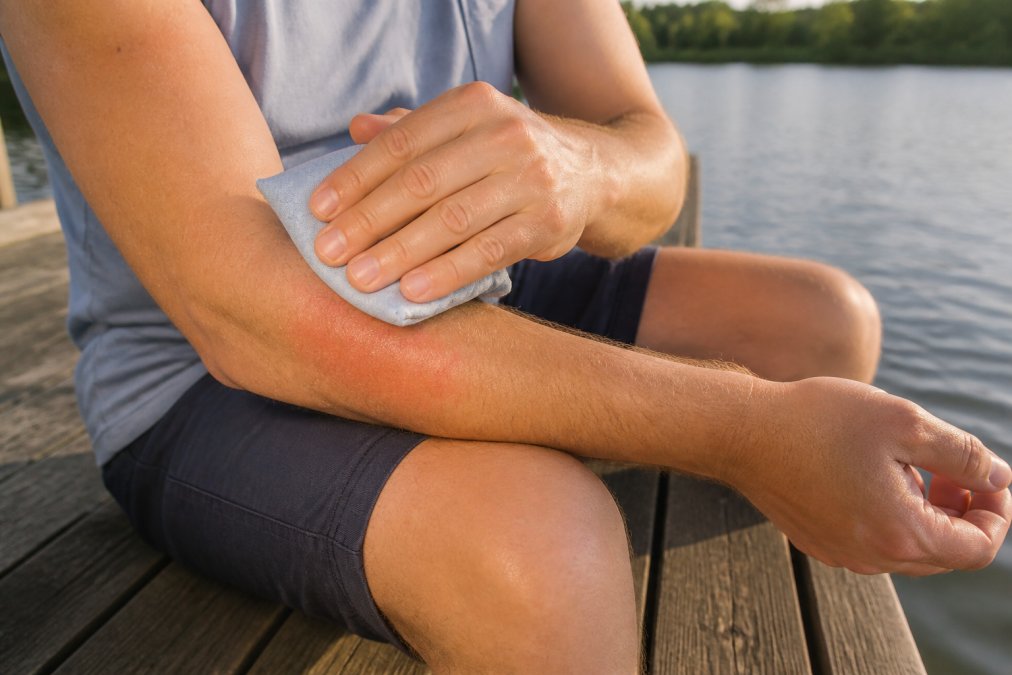
A cold compress is the single most effective immediate intervention for reducing swelling and numbing the itch sensation. Wrap ice or a cold pack in a thin cloth and apply it to the bite site for 10 to 15 minutes. Cold constricts blood vessels, reducing the localized inflammatory response and interrupting nerve signals that communicate itch to the brain.
Repeat every hour for the first few hours if swelling and itch remain intense.
Step 3: Use a Topical Treatment
Once the bite site is clean and cooled, apply a topical treatment to address the ongoing allergic reaction. Options range from hydrocortisone cream and topical antihistamines to calamine lotion and natural essential oil formulations.
How to Stop Itching from Bug Bites: OTC and Home Remedies
Itch relief from no-see-um bites requires interrupting the histamine response driving inflammation. Several well-established options work reliably and are available without a prescription.
Over-the-Counter Options That Work
Hydrocortisone cream (1%) is the most widely recommended OTC topical treatment for insect bite inflammation. This mild corticosteroid reduces the immune response at the bite site, lowering redness, swelling, and itching. Apply a thin layer directly to the bite site two to three times daily. Avoid using it on broken skin or for more than seven consecutive days without medical guidance.
Topical antihistamines like diphenhydramine cream work by blocking histamine receptors in the skin, directly addressing the chemical trigger behind the itch. They are particularly effective in the first 24 to 48 hours when histamine release is at its peak.
Oral antihistamines such as cetirizine or loratadine are worth reaching for when bites are widespread or the localized reaction is severe.
|
Treatment |
Best For |
Application |
Notes |
|---|---|---|---|
|
Hydrocortisone cream (1%) |
Localized swelling and redness |
2-3x daily, thin layer |
Do not use on broken skin |
|
Topical antihistamine |
Intense localized itch |
Apply directly to bite |
Most effective in first 48 hours |
|
Oral antihistamine |
Widespread bites or strong reaction |
Once or twice daily |
Drowsiness possible with older formulas |
|
Calamine lotion |
General itch relief and drying |
As needed |
Soothing, widely available |
|
Cold compress |
Immediate swelling reduction |
10-15 min per session |
Best as first response |
Home Remedies: Baking Soda, Calamine, and More
Home remedies can be genuinely effective for managing no-see-um bite discomfort, particularly when OTC products are unavailable.
Baking soda paste is one of the most reliable home remedies. Mix one teaspoon of baking soda with enough water to form a thick paste, apply it directly to the bite site, and leave it on for 10 minutes before rinsing. The alkaline nature of baking soda helps neutralize acidic compounds in insect saliva, reducing the itch signal.
Calamine lotion has soothed skin irritation for generations. Its combination of zinc oxide and iron oxide creates a cooling, drying effect on inflamed skin. Apply it liberally to bite clusters and allow it to dry.
Aloe vera gel (fresh from the plant or pure commercial gel) soothes inflamed skin and provides a cooling sensation similar to a cold compress.
Allergic Reactions and When to See a Doctor
Most no-see-um bites resolve with self-care, but some people develop a more significant allergic reaction requiring medical attention.
Signs of a moderate to severe allergic reaction include:
- Bites that swell dramatically beyond the immediate bite site
- Hives or a rash spreading away from the bite cluster
- Significant warmth, tightness, or hardness in the surrounding skin
- Swollen lymph nodes near the bite area
- Fever, chills, or flu-like symptoms developing within 24 to 48 hours
A severe allergic reaction, known as anaphylaxis, is rare from midge bites but possible. If you or someone nearby experiences difficulty breathing, throat tightening, dizziness, or rapid loss of alertness after being bitten, call 911 immediately. According to the American Academy of Allergy, Asthma and Immunology’s guidance on insect bite reactions, individuals with known insect allergies should carry an epinephrine auto-injector during outdoor activities in high-risk areas.
For uncomfortable but non-emergency reactions, a same-day urgent care visit is appropriate when standard OTC treatments are not providing relief after 48 hours, or when the bite site shows signs of infection.
Post-Bite Infection Prevention
Secondary infection is the most common complication of no-see-um bites and is almost entirely preventable. Scratching breaks the skin, bacteria enter, and what started as a minor allergic reaction becomes a bacterial skin infection requiring antibiotics.
Keep your fingernails short and clean during the recovery period. If dealing with bites on children, consider covering the bite area with a light bandage or clothing to reduce unconscious scratching during sleep.
Watch the bite site for these warning signs of infection:
- Increasing redness that spreads beyond the original bite
- Yellow or green discharge from the bite site
- Skin that feels hot to the touch 48 hours after the bite
- Red streaks radiating outward from the bite
If you observe any of these signs, see a healthcare provider promptly. Mild infections can be treated with topical antibiotics, but spreading infections may require oral antibiotics.
No-See-Um Bite Duration: What to Expect During Recovery
No-see-um bite duration varies depending on individual sensitivity, how quickly treatment begins, and whether the person has been bitten repeatedly in the past.
For most people, the typical recovery timeline looks like this:
- Hours 1-6: Peak itch and burning sensation. Swelling and redness are most pronounced.
- Hours 6-24: Inflammation begins to subside with treatment. Itching remains but is less intense.
- Days 2-3: The bite site flattens. Residual redness and mild itching may persist.
- Days 4-7: Most bites are fully resolved for people with average sensitivity.
For individuals with heightened sensitivity or extensive bites, recovery can extend to two weeks. The most reliable predictor of recovery time is how quickly you started treatment. Bites treated within the first hour with cold therapy and a topical treatment consistently resolve faster than untreated bites.
Best Repellent for No-See-Ums: Prevention Before the Bite
The most effective strategy for managing no-see-um bites is stopping them before they happen. No-see-ums are notoriously difficult to repel compared to mosquitoes, partly because of their size and partly because standard DEET-based repellents are less effective against biting midges.

According to the EPA’s registered repellent guidance for biting insects, DEET remains an EPA-registered active ingredient for repelling biting midges, but concentration matters, and many people prefer DEET-free options for daily or family use.
Clothing and Barrier Protection
Clothing is an underrated barrier against no-see-ums. Because of their tiny size, these midges can pass through standard window screens, which is why fine-mesh screens rated for no-see-ums are necessary for structures near coastal wetlands or salt marshes.
For personal protection, clothing efficacy depends on weave density and coverage:
- Light-colored, tightly woven fabrics covering ankles, wrists, and neck significantly reduce bite exposure
- Permethrin-treated clothing provides an additional chemical barrier for extended outdoor activities
- Loose-fitting clothing is preferable to tight-fitting garments, as midges can bite through fabric pressed directly against the skin
- Head nets with fine mesh are worth carrying for dawn and dusk activities near high-density breeding habitats
Plan outdoor activities to avoid peak activity periods at dusk and dawn, or ensure you are fully covered and protected before heading out.
Essential Oil-Based Repellents and Scram Products
Essential oil-based repellents have grown significantly in popularity as alternatives to synthetic chemical repellents, particularly for families with young children and individuals with sensitive skin.
Scram Products No-See-Um Bug Guard is formulated with a blend of essential oils including citronella, eucalyptus, lavender, cedarwood, and patchouli, all recognized for their insect-repelling properties. Unlike conventional spray repellents, Scram is a multipurpose collagen beauty cream that protects against no-see-ums while nourishing the skin simultaneously. It is waterproof, making it practical for swimming, fishing, kayaking, and other water-based activities where standard repellents wash off quickly.
The formula is labeled for children 2 years and older and carries none of the chemical smell that makes many families reluctant to apply conventional repellents consistently. Testers from our group at the marina, including Sean C., Chuck S., and Peter G., reported reliable protection during evening outdoor activities in high-exposure environments.
A properly formulated essential oil blend applied generously to all exposed skin, and reapplied after swimming, can provide effective protection.
Conclusion
No-see-um bites are one of the more miserable outdoor experiences. Treating them effectively means acting fast: clean the bite site, apply cold therapy, and follow up with a proven topical treatment to manage the allergic reaction. For anyone spending time outdoors in coastal or tropical environments, prevention is a more efficient strategy than treatment.
Scram Products No-See-Um Bug Guard was designed for exactly this situation: reliable, skin-friendly protection that works for the whole family during outdoor activities, formulated with citronella, eucalyptus, lavender, cedarwood, and patchouli essential oils in a waterproof collagen cream that nourishes as it protects. Visit the Scram Products website to learn more and PURCHASE NOW.
Frequently Asked Questions
Q: How long does it take for no-see-um bites to go away?
A: No-see-um bites typically resolve within one to two weeks, though the timeline varies by individual skin sensitivity. The initial welt and intense itching usually peak within the first 24 to 48 hours. People with stronger allergic responses may experience swelling and skin irritation for up to two weeks. Avoiding scratching, applying hydrocortisone cream, and keeping the bite site clean all help shorten recovery time and reduce the risk of secondary infection.
Q: What do no-see-um bites look like on human skin?
A: No-see-um bites appear as small, red, raised welts, often grouped in clusters on exposed skin. Unlike a single mosquito bite, biting midges (Ceratopogonidae) tend to leave multiple puncture wounds in one area because they feed in groups. The bite site usually swells, reddens, and becomes intensely itchy within minutes. In people with heightened sensitivity, the dermatological response can include larger hives or fluid-filled bumps that resemble an allergic reaction.
Q: What is the best way to stop itching from no-see-um bites?
A: The fastest relief comes from a combination of a cold compress to reduce swelling and a topical antihistamine or hydrocortisone cream to calm the itch. Calamine lotion and baking soda paste are effective home remedies that soothe skin irritation without medication. Oral antihistamines help when bites are widespread or the itching is severe. The key is to avoid scratching, which breaks the skin and opens the door to secondary infection.
Q: Are there effective ways to prevent no-see-um bites before they happen?
A: Yes. No-see-ums are most active at dusk and dawn near standing water and coastal breeding habitats, so timing outdoor activities away from those windows helps. Wearing tightly woven clothing that covers arms and legs, using fine mesh screens on windows, and applying a repellent formulated for biting midges are the most reliable preventative measures. Repellents containing DEET, permethrin, or essential oils like citronella, eucalyptus, and cedarwood all provide meaningful protection when applied correctly.
This article was written using GrandRanker


